Learn what qualifies as a roofing emergency in Sacramento, what to do safely, and how temporary protection leads to a permanent repair.
Helpful Service Pages
An emergency roof problem is about immediate risk: water entering living space, an opening that lets weather reach the roof layers, or impact damage that may worsen with the next storm. Sacramento homeowners do not need to diagnose the exact failure in the moment. They do need to keep people safe, limit interior damage, document what they can, and avoid making a dangerous roof situation worse.
Know the Difference Between Urgent and Routine
An active drip, water near wiring, a ceiling bulge, exposed decking, or a tree limb on the roof needs immediate attention. A small stain discovered after rain can still be important, but may be handled through a prompt standard appointment if no water is entering and the roof is not exposed. If you are unsure, describe the conditions when you call for emergency roof repair so the response can be prioritized appropriately.
- Active water entering rooms, an attic, or an attached garage.
- A fallen limb, puncture, or visibly open section of roof.
- Wind-lifted roofing that exposes underlayment or decking.
- A leak near a light fixture, outlet, panel, or other electrical equipment.
- A ceiling bulge, structural concern, or rapidly spreading water damage.
Safety First: Evacuation and Life Hazards
If anyone is injured, if there is fire, if power lines are down, if the structure appears unstable, or if utilities create an immediate hazard, prioritize emergency services and utility response over roofing work. Leave unsafe rooms. Do not stand under a sagging ceiling. If water is near electrical equipment, avoid contact and treat it as a safety issue until a qualified professional says otherwise. Roofers help after people and utilities are safe.
First Actions Inside the Home
Move belongings and people out of the affected area. Collect dripping water with containers and protect floors with towels or plastic where safe. Take photos before cleanup if you can do so without delaying safety. These small actions provide useful records and reduce secondary damage while you wait for help.
Do Not Attempt a Storm Roof Repair
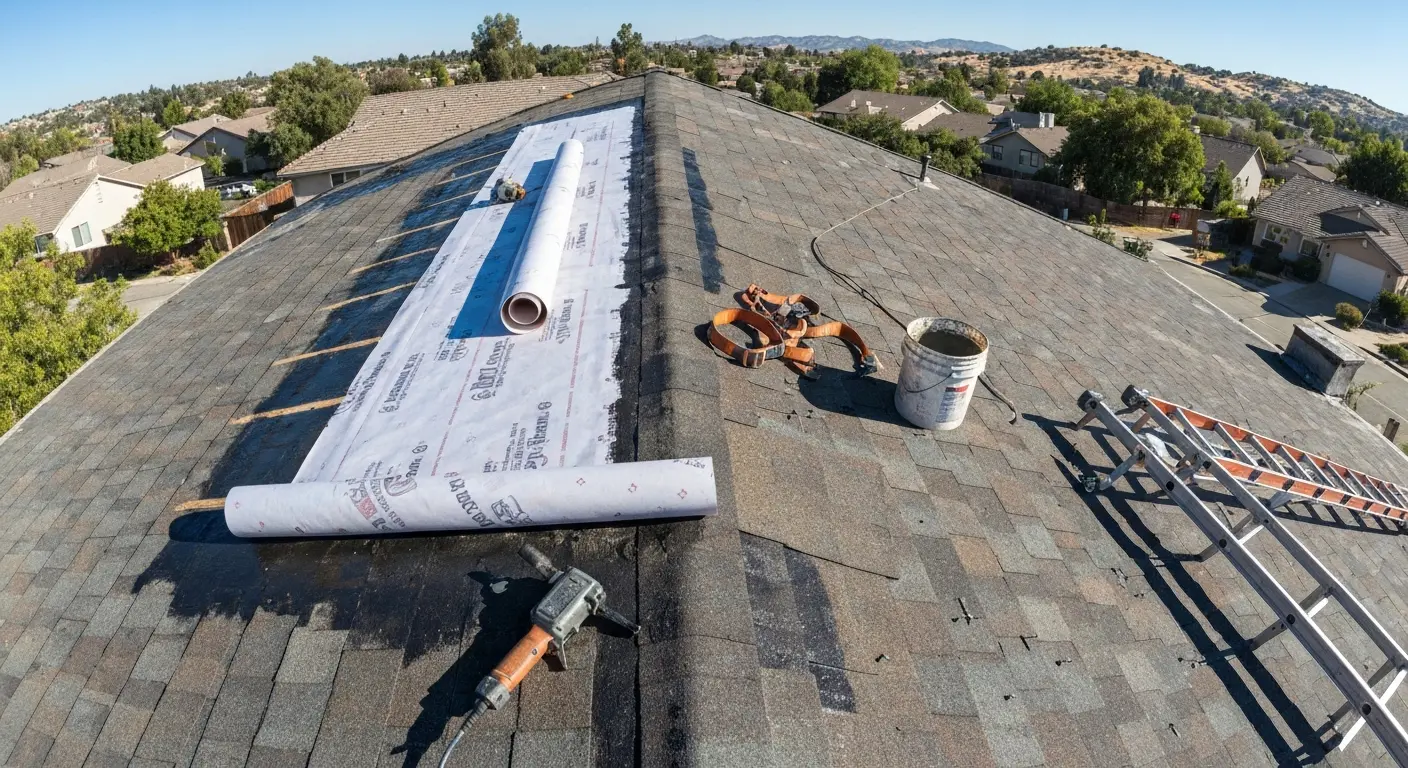
Climbing onto a roof in rain or wind is unsafe even for experienced workers. A tarp installed incorrectly can tear, trap water, or damage shingles and tile. Do not nail through a roof system from the surface as a quick fix. The practical response is to contain water indoors, wait for a safe weather window, and let a trained crew assess whether temporary weatherproofing is appropriate. Our emergency roof tarp guide explains the limited role a tarp can play.
Temporary Stabilization Versus Permanent Repair
Emergency work is often stabilization, not a final diagnosis completed in the middle of a storm. Once access is safe, a roofer can inspect the damage, identify immediate openings, and determine whether a temporary cover or targeted repair will reduce exposure. A follow-up inspection may be needed to assess the surrounding material, flashing, underlayment, and interior effects after the roof dries.
This distinction matters. A visible missing shingle might be the cause of the leak, or it might be one symptom of broader wind damage. A puncture can affect decking beyond what is visible from the ground. Stabilizing the roof protects the home; the permanent roof repair scope should correct the full water-shedding detail.
Prepare Before Storm Season
Homeowners can reduce emergency risk before winter rain by clearing gutters and valleys where safe from the ground, noting aging sealant around penetrations, trimming trees that overhang the roof, and scheduling a roof inspection when materials look worn. Store tarps, buckets, flashlights, and important contact numbers where they are easy to reach. Preparation does not prevent every storm failure, but it makes the response safer and faster when weather arrives.
Sacramento Weather and Roof Emergencies
Winter rain, gusty wind, and debris can expose weak areas quickly. Sacramento's dry heat also matters because older sealant and shingles can lose flexibility before storm season arrives. Valleys filled with leaves, aging pipe boots, flashing transitions, and previously repaired areas are common places to investigate after a weather event. A roof that appears fine from the street can still have a failure below the visible surface.
Document Damage for Your Records
Use photos, video, and notes to create a simple timeline: when the storm began, when water was first noticed, where it appeared, and what visible damage you observed. Keep records of temporary protection and interior mitigation. If you plan to contact your insurer, ask about its process and preserve documentation. For a complete overview, see our roof insurance claims guide. Coverage decisions belong to the insurer; a roofer can document physical conditions and explain repair needs.
After the Weather Clears
Schedule a thorough inspection even if the dripping stops. Water can continue to affect insulation, drywall, and framing after the visible symptom changes. The inspection should look beyond the immediate opening for lifted edges, cracked materials, displaced flashing, debris damage, and drainage problems. Review our storm damage roof repair guide for the signs that can be easy to miss after a storm.
Plan the Permanent Repair
A permanent repair should restore the roof's layers and water path, not simply cover the damaged spot. Depending on the roof, that can mean replacing shingles, repairing flashing, restoring underlayment under tile, or addressing damaged decking. If the roof has widespread age-related issues, the inspection should also explain when replacement is more practical than repeated emergency patches.
Ask what part of the work is temporary, what restores weatherproofing permanently, and what conditions might change the scope after a closer dry-weather inspection. Keep the emergency notes, photos, and invoices together so later conversations with an insurer or another contractor start from facts rather than memory of a stressful storm night.
Once the immediate issue is resolved, reassess valleys, penetrations, and any debris impact areas before the next rainy stretch. Temporary protection buys time; permanent repair restores the water path so the same opening does not become another midnight emergency.
Get Help Without Taking Unnecessary Risks
If rain is entering your Sacramento home or an opening is visible after a storm, request emergency service and focus on indoor safety first. If the situation is stable, arrange an inspection before the next rain. PRC 13 can help identify the failure, explain temporary and permanent options, and provide a clear path forward without asking you to make a roof-level decision from the ground.
Frequently Asked Questions
Active water entering the home, a large opening that exposes the roof layers, a fallen limb impact, wind-lifted sections, or damage near electrical equipment can require urgent roof assessment. A small old stain without active water may still need prompt inspection, but it is not always a same-hour emergency.
No. Wet roofs, wind, lightning, and loose materials create serious fall hazards. Protect the interior from below and arrange professional help when conditions allow safe access.
Many permanent repairs need safer, drier working conditions. During active rain, priority often shifts to interior protection and temporary stabilization when weather and safety allow. Full diagnosis and permanent repair usually follow once access is safer.
No. A tarp is temporary weather protection when appropriate. The roof still needs inspection and a permanent repair once it is safe and dry enough to evaluate the failed detail.
From safe locations, photograph interior water, ceiling stains, debris, damaged belongings, and exterior damage visible from the ground. Note the date and weather, and keep receipts for mitigation work. Coverage decisions still belong to the insurer.
Call emergency services for life-safety threats such as fire, downed power lines, structural collapse concerns, significant gas risks, or other conditions that make the home unsafe to occupy. Call the utility if you have electrical hazards or service issues they must address. Call a roofer for roof water intrusion and storm roof openings once people are safe.
Emergency Help
Need Emergency Roof Repair in Sacramento?
Active leak or storm damage? PRC 13 Roofing responds quickly to urgent roof repair calls across Sacramento and nearby communities.
Related Services
PRC 13 Roofing Inc.
Sacramento residential roofing specialists. Lic. No. 1087153. Articles are based on real field experience.