Active leaks and storm openings on El Dorado Hills roofs need safe interior protection, careful assessment, and a clear path from temporary stabilization to permanent repair.
Helpful Service Pages
An emergency roof problem in El Dorado Hills is less about a calendar label and more about immediate risk. Active water in living space, a storm opening that exposes roof layers, or impact damage that may worsen with the next front all call for a calm, safety-first response. PRC 13 helps homeowners protect the interior, assess openings when conditions allow, and move from temporary stabilization to a lasting roof repair plan.
What Qualifies as an Emergency in El Dorado Hills
Urgent situations usually involve water that is entering now, a section of roof that is open to weather, or damage that creates a clear path for the next storm. A ceiling bulge, dripping near lights or outlets, wind-lifted ridge material, or a limb resting on the roof belongs in that category. A faint stain discovered days after rain can still matter, but it may be handled through a prompt inspection if no water is active and the roof surface is not exposed.
- Active drips in rooms, an attic, or an attached garage.
- Visible openings, punctures, or missing sections after wind or impact.
- Wind-lifted shingles, ridge caps, or tile that expose underlayment or decking.
- Water near electrical fixtures, panels, or outlets.
- Rapidly spreading stains, sagging drywall, or structural concern.
If you are unsure, describe what you see when you contact emergency roof repair. Clear details about active water, openings, and access help prioritize the response without guessing from a photo alone.
Foothill Wind, Ridge Exposure, and Oak Debris
An El Dorado Hills homeowner on an open ridge lot may notice wind-driven rain or lifted edge material after a front that barely affected a more sheltered street. Foothill gusts can concentrate on upper roofs, gable ends, and ridge lines. Oak limbs and debris near open-space edges can also strike or accumulate on slopes and in valleys. Those patterns do not mean every EDH roof fails the same way; they explain why local emergencies often start at ridges, hips, valleys, and penetrations rather than in the middle of a protected field.
Hillside and multi-level homes add another layer: water can travel farther from the entry point before it appears indoors. A leak that shows in a lower-story ceiling may have entered higher on the roof. That is why emergency response focuses first on safety and containment, then on tracing the water path once access is workable.
Steep Roofs and Why Access Safety Matters
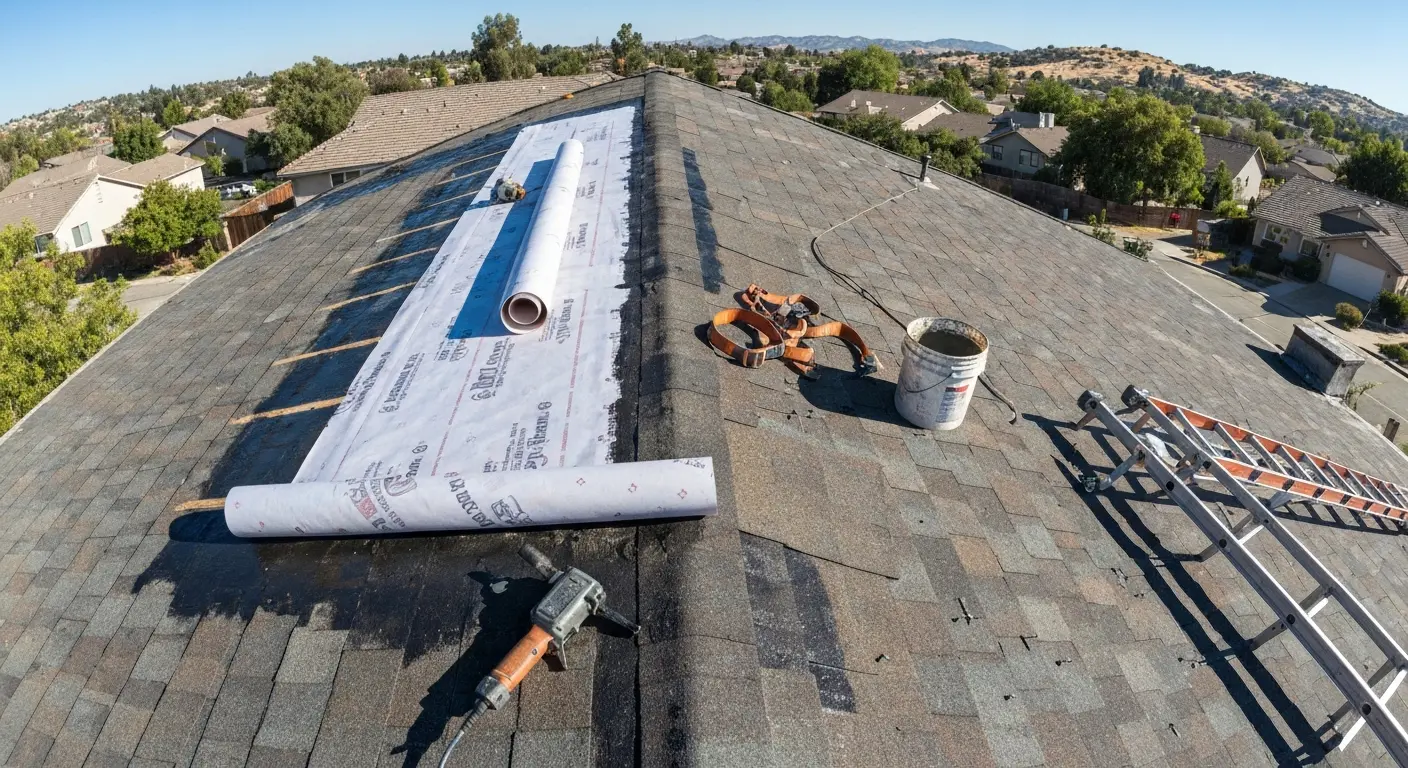
Many El Dorado Hills roofs are steep, tall, or broken into planes that are difficult to walk in wet weather. Homeowners should not climb to place temporary covers or pull materials back during a storm. Professional crews also wait for conditions that allow safe footing and secure temporary protection when it is appropriate. A rushed climb can create a more serious emergency than the original leak.
Indoor First Steps While You Wait
Move people and belongings away from wet areas. Place containers under drips and use towels to limit floor spread. Photograph stains, dripping, and any exterior damage visible safely from the ground. Note the date and weather. If a ceiling is bulging, keep clear of that zone. If water is near electrical equipment, avoid contact and treat the area as a safety issue until a qualified professional says otherwise.
- Protect furnishings and keep walkways clear of standing water.
- Document interior and ground-level exterior conditions before cleanup when safe.
- Leave damaged roof material in place until you understand any insurance documentation needs.
- Call for help if water is active, a large section is exposed, or a tree has struck the roof.
What Not to Do During an EDH Roof Emergency
Do not walk a wet steep roof. Do not nail random boards or plastic over openings in a way that can trap water or damage surrounding material. Do not cut into a bulging ceiling unless a qualified professional says it is safe. Do not assume a tube of sealant will solve a storm opening. Temporary measures have a place, but they need to be chosen for the roof type and installed so they do not make later permanent work harder.
Our emergency roof tarp guide explains when temporary exterior protection may help and why it is never a substitute for inspection and permanent repair.
Temporary Stabilization Versus Permanent Repair
Emergency work often means limiting further water entry and protecting the home until a full diagnosis is possible. That can include interior containment and, when weather and access allow, temporary exterior protection over an opening. Permanent repair restores the water-shedding layers—shingles or tile details, underlayment, flashing, ridge, or penetration work—so the roof can handle later storms. Temporary and permanent are different jobs with different goals.
After stabilization, a follow-up look at surrounding material matters. Wind that lifted one ridge section may have stressed nearby tabs or hip details. A limb impact can affect decking beyond the visible puncture. The assessment process should explain what failed, what was protected temporarily, and what permanent scope is needed.
How Assessment Usually Works
Once conditions allow safer access, a roofer reviews interior clues, attic moisture when accessible, and the roof areas uphill from the symptom. Penetrations, valleys, ridge lines, edges, and drainage paths get attention because EDH storm water often concentrates there. Findings are explained in plain language: what is urgent, what can wait for dry weather, and whether targeted repair or a broader plan fits the roof condition. A roof inspection after the emergency phase can confirm the full picture once the system has dried.
Insurance Documentation—With an Important Disclaimer
If wind, debris, or another sudden event may have caused the damage, keep your photos and notes. Coverage depends on the policy and the insurer's review. PRC 13 can document roof conditions and temporary work for your records, but we cannot guarantee claim approval or interpret policy language as an insurance professional. For a deeper look at documentation habits in this community, read roof insurance claims in El Dorado Hills.
Sacramento County Storm Season Prep for EDH Homes
Before winter rain, walk the property from the ground and note loose debris, overflowing gutters, or prior leak rooms. Clear gutters and downspouts when it is safe to do so. If the roof is aging, has had prior wind damage, or sits on an exposed lot, schedule inspection before the wettest months. After atmospheric river periods, check for new stains and material on the ground. Prep does not prevent every emergency, but it reduces surprises and shortens the path to a clear repair decision.
When Repair Makes Sense—and When Replacement Enters the Conversation
A localized opening on a roof with sound surrounding material often points to permanent repair after the emergency is controlled. Recurrent leaks across slopes, widespread worn shingles or failing tile underlayment, soft decking, or a roof near the end of its useful life can make repeated emergency patches less practical. Emergency response still protects the home; the later decision compares repair scope against replacement based on inspection findings rather than panic.
Get Help for Active Leaks and Storm Openings
If your El Dorado Hills home has active water intrusion, a storm opening, or impact damage, prioritize safety indoors and contact PRC 13 for emergency roof repair. For community-specific service context, visit our El Dorado Hills roofing hub. When the immediate risk is controlled, we can move from temporary protection to a documented permanent repair plan that fits the roof you have—not a generic checklist.
Frequently Asked Questions
Active water entering the home, a large storm opening, wind-lifted sections that expose underlayment or decking, a limb impact, or a leak near electrical equipment can require urgent assessment. A small old stain without active water may still need prompt inspection, but it is not always an immediate emergency.
Open ridge and hillside lots can take stronger wind and less tree shelter than sheltered valley streets. Gusts may lift ridge caps, edge shingles, or hip details, and oak debris can puncture or displace material. Each roof still needs its own assessment rather than assumptions based on neighborhood alone.
No. Many EDH roofs are steep, multi-level, or difficult to access safely in wet or windy conditions. Contain water indoors, stay off the roof, and arrange professional help when weather and access allow a safer evaluation.
No. Temporary exterior protection is meant to limit further water entry when conditions require short-term stabilization. The roof still needs inspection and a permanent repair once it is safe enough to evaluate the failed detail. Our emergency tarp guide explains that limited role.
Coverage depends on your policy, the cause of damage, deductibles, and the insurer's review. PRC 13 can document conditions and temporary work for your records, but we cannot guarantee approval or interpret your policy as an insurance professional. See our El Dorado Hills insurance claims guide for documentation tips.
Before winter rain, clear visible debris from gutters and valleys when safe from the ground, note any prior leak areas, and schedule a roof inspection if the roof is aging or has had wind damage. After a major wind or rain event, check for new interior stains and material on the ground without climbing.
If openings, leaks, or worn material appear across multiple slopes, if decking or underlayment is broadly compromised, or if the roof is near the end of its service life, a permanent repair may still stabilize the home while a replacement plan is evaluated. An inspection should compare both paths.
El Dorado Hills Roofing
Schedule Roofing Service in El Dorado Hills
PRC 13 Roofing serves El Dorado Hills homeowners with repair, replacement, tile and metal roofing, fascia repair, inspections, and emergency leak help on exposed foothill properties.
Related Services
PRC 13 Roofing Inc.
Sacramento residential roofing specialists. Lic. No. 1087153. Articles are based on real field experience.